No products in the cart.
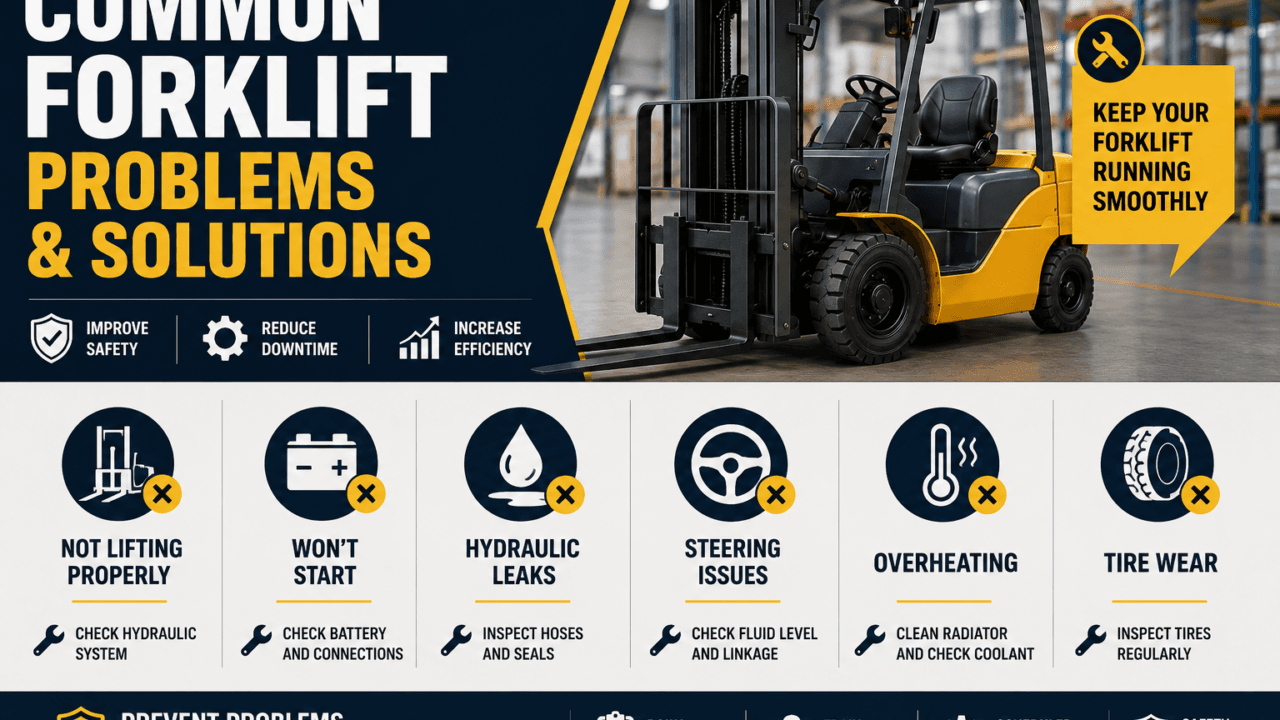
Forklifts are essential equipment in warehouses, logistics centers, factories, and industrial operations. However, without proper maintenance and inspection, forklifts may experience operational problems that affect efficiency and workplace safety.
In this guide, we will explain the most common forklift problems, their possible causes, and practical solutions to help reduce downtime and improve equipment performance.
For a complete overview of forklift operation and maintenance, visit our Forklift Guide.
Why Forklift Maintenance Matters
Regular forklift maintenance helps:
- Reduce equipment downtime
- Improve workplace safety
- Extend forklift lifespan
- Lower repair costs
- Increase operational efficiency
Ignoring small forklift issues can eventually lead to expensive repairs and safety risks.
You can also follow our forklift maintenance checklist for routine inspections.
Forklift Not Lifting Properly
One of the most common forklift problems is weak or slow lifting performance.
Possible Causes
- Low hydraulic oil
- Hydraulic system leaks
- Damaged lift cylinders
- Worn hydraulic pump
- Overloaded forklift
Solutions
- Check hydraulic oil levels
- Inspect hoses and fittings for leaks
- Replace damaged hydraulic components
- Avoid exceeding forklift load capacity
For load recommendations, read our forklift capacity guide.
Forklift Engine Won’t Start
This issue is common in both diesel and electric forklifts.
Possible Causes
Diesel Forklifts:
- Low fuel level
- Weak battery
- Dirty fuel filter
- Starter motor failure
Electric Forklifts:
- Low battery charge
- Loose battery connections
- Faulty charger
Solutions
- Check battery condition
- Inspect fuel supply
- Replace clogged filters
- Ensure charging equipment works properly
Learn more in our electric forklift battery guide.
Forklift Hydraulic Problems
Hydraulic system issues can affect lifting speed and stability.
Common Symptoms
- Slow lifting
- Mast vibration
- Uneven lifting
- Hydraulic oil leakage
Possible Causes
- Contaminated hydraulic oil
- Worn seals
- Air inside the hydraulic system
- Damaged hydraulic pump
Solutions
- Replace hydraulic oil regularly
- Inspect hydraulic cylinders
- Remove air from the system
- Replace worn seals
Forklift Steering Problems
Difficulty steering can reduce operational safety, especially in narrow warehouse aisles.
Possible Causes
- Low hydraulic fluid
- Steering cylinder damage
- Tire wear
- Steering linkage issues
Solutions
- Check hydraulic fluid levels
- Inspect steering components
- Replace damaged tires
- Perform regular maintenance inspections
Read our forklift tire guide for more information about tire selection and maintenance.
Forklift Overheating
Overheating is common in heavy-duty or long-shift operations.
Possible Causes
- Low coolant level
- Dirty radiator
- Blocked airflow
- Excessive workload
Solutions
- Clean the radiator regularly
- Check coolant levels
- Avoid continuous overloading
- Inspect engine cooling systems
Forklift Battery Draining Quickly
This issue mainly affects electric forklifts.
Possible Causes
- Aging battery
- Improper charging habits
- Battery corrosion
- Excessive operating hours
Solutions
- Follow correct charging procedures
- Clean battery terminals
- Replace old batteries when necessary
- Avoid deep discharging
Forklift Tire Wear Problems
Worn forklift tires reduce stability and increase safety risks.
Common Causes
- Overloading
- Rough operating surfaces
- Poor tire maintenance
- Incorrect tire selection
Solutions
- Inspect tires regularly
- Use suitable tires for the environment
- Replace damaged tires promptly
- Avoid excessive loads
For indoor and outdoor tire selection, visit our forklift tire types guide.
Unusual Forklift Noises
Abnormal noises often indicate mechanical problems.
Possible Causes
- Loose components
- Worn bearings
- Hydraulic issues
- Transmission wear
Solutions
- Perform regular inspections
- Tighten loose parts
- Lubricate moving components
- Replace worn mechanical parts
How to Prevent Common Forklift Problems
Preventive maintenance is the best way to reduce forklift failures.
Recommended Practices
- Perform daily inspections
- Train forklift operators properly
- Follow scheduled maintenance plans
- Use the correct forklift for the application
- Replace worn components early
For warehouse equipment selection, read our Best Forklift for Warehouse guide.
Electric vs Diesel Forklift Maintenance
Electric forklifts generally require:
- Less maintenance
- Fewer moving parts
- Lower operating costs
Diesel forklifts are better for:
- Heavy-duty applications
- Outdoor environments
- Long operating hours
Read our electric forklift vs diesel forklift comparison guide for more details.
Conclusion
Understanding common forklift problems can help businesses improve safety, reduce downtime, and lower maintenance costs.
Regular inspections and preventive maintenance are essential for maintaining forklift performance and extending equipment lifespan.
Choosing the right forklift and maintaining it properly will improve warehouse efficiency and long-term operational reliability.
FAQs
What is the most common forklift problem?
Hydraulic lifting problems and battery issues are among the most common forklift problems.
Why is my forklift not lifting properly?
Possible causes include low hydraulic oil, leaks, or overloaded operation.
How often should forklifts be inspected?
Daily inspections are recommended before operation.
How can I reduce forklift maintenance costs?
Regular maintenance, proper operator training, and early problem detection can significantly reduce repair costs.