No products in the cart.
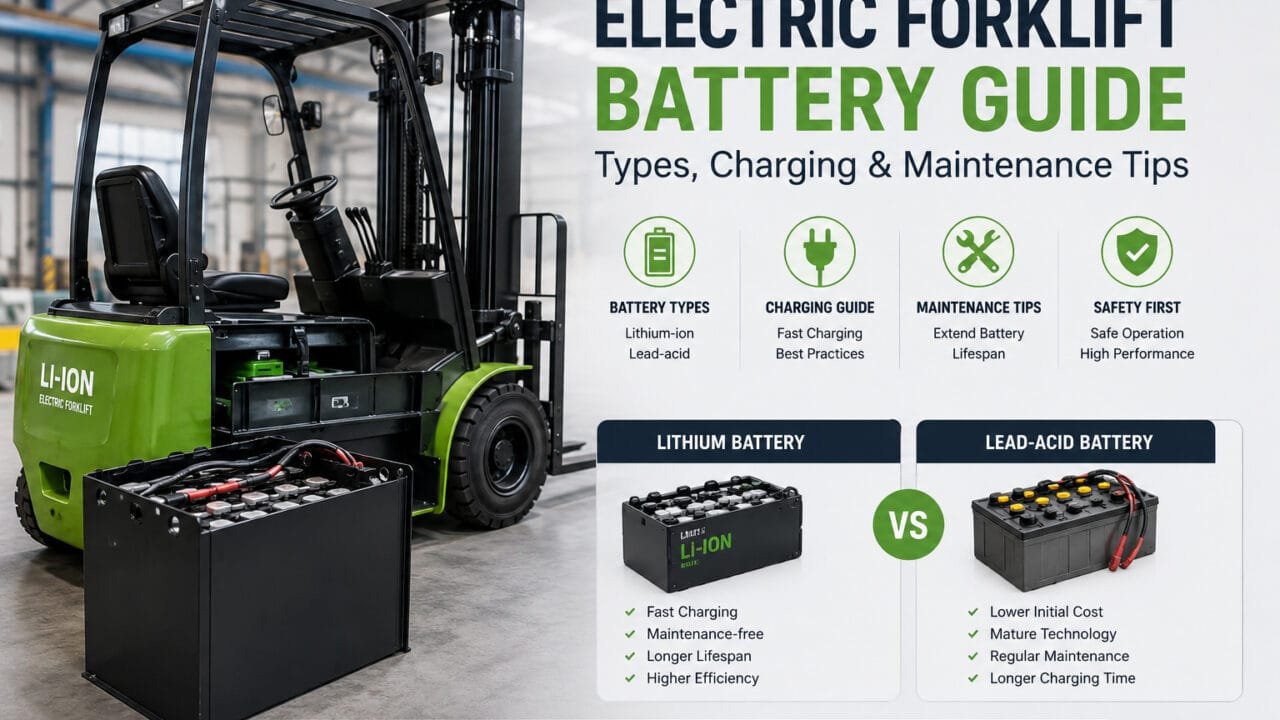
The battery is one of the most important components of an electric forklift. Choosing the right battery and maintaining it properly can significantly improve performance, reduce downtime, and extend equipment lifespan.
In this electric forklift battery guide, we’ll explain the different battery types, charging methods, maintenance tips, and how to choose the best battery for your warehouse operation.
For a complete overview of forklift types and applications, visit our Forklift Guide.
Why Electric Forklift Batteries Matter
An electric forklift battery directly affects:
- Operating time
- Lifting performance
- Charging efficiency
- Maintenance costs
- Overall productivity
A high-quality battery ensures stable performance and lower operating expenses over time.
👉 Explore our electric forklift solutions for warehouse operations.
Types of Electric Forklift Batteries
1. Lithium-Ion Battery
Lithium batteries are becoming increasingly popular in modern warehouses.
Advantages:
- Fast charging
- Maintenance-free
- Longer lifespan
- Higher energy efficiency
- Opportunity charging support
Lithium batteries are ideal for:
- High-intensity warehouse operations
- Multi-shift work environments
- E-commerce logistics centers
2. Lead-Acid Battery
Lead-acid batteries are the traditional option for electric forklifts.
Advantages:
- Lower initial cost
- Widely available
- Proven reliability
Disadvantages:
- Requires regular maintenance
- Longer charging time
- Shorter lifespan compared to lithium batteries
Lithium vs Lead-Acid Forklift Battery
Quick Comparison
| Feature | Lithium Battery | Lead-Acid Battery |
|---|---|---|
| Charging Time | Fast | Slow |
| Maintenance | Minimal | Regular maintenance |
| Lifespan | Longer | Shorter |
| Efficiency | Higher | Lower |
| Initial Cost | Higher | Lower |
If you compare total operating costs, lithium batteries are often more economical in the long run.
How Long Does an Electric Forklift Battery Last?
Battery lifespan depends on:
- Usage intensity
- Charging habits
- Maintenance quality
- Operating environment
Typical Lifespan:
- Lithium battery: 3,000–5,000 cycles
- Lead-acid battery: 1,000–1,500 cycles
Electric Forklift Battery Charging Guide
Proper charging is essential for battery performance and safety.
Best Charging Practices:
- Charge batteries in well-ventilated areas
- Avoid deep discharging
- Use the correct charger
- Follow manufacturer charging instructions
Lithium batteries support opportunity charging, allowing operators to recharge during short breaks.
Electric Forklift Battery Maintenance Tips
1. Keep Batteries Clean
Dust and corrosion can reduce efficiency.
2. Avoid Overcharging
Overcharging shortens battery lifespan.
3. Monitor Temperature
Extreme temperatures affect battery performance.
4. Perform Regular Inspections
Check:
- Cables
- Connectors
- Battery condition
- Charging system
👉 Follow a proper forklift maintenance checklist to reduce battery-related issues.
Common Electric Forklift Battery Problems
Battery Draining Quickly
Possible causes:
- Aging battery
- Improper charging
- Heavy usage
Slow Charging
Possible causes:
- Faulty charger
- Battery overheating
- Poor electrical connection
Reduced Operating Time
This may indicate battery wear or maintenance issues.
How to Choose the Right Forklift Battery
Consider These Factors:
1. Working Hours
Multi-shift operations usually benefit from lithium batteries.
2. Warehouse Environment
Cold storage facilities may require specialized battery solutions.
3. Budget
Lead-acid batteries cost less initially, while lithium batteries offer better long-term value.
4. Charging Infrastructure
Ensure your facility supports your chosen charging system.
Which Battery Is Best for an Electric Forklift?
Quick Answer
- Choose lithium batteries for high efficiency, fast charging, and low maintenance
- Choose lead-acid batteries for lower upfront cost and lighter-duty applications
👉 For warehouse equipment selection, read our Best Forklift for Warehouse guide.
Electric Forklift vs Diesel Forklift Operating Costs
Electric forklifts generally have:
- Lower fuel costs
- Lower maintenance requirements
- Reduced emissions
- Quieter operation
👉 Learn more in our electric forklift vs diesel forklift comparison guide.
Conclusion
Understanding forklift batteries is essential for maximizing equipment performance and reducing operating costs.
- Lithium batteries offer higher efficiency and lower maintenance
- Lead-acid batteries remain a cost-effective option for some operations
- Proper charging and maintenance significantly extend battery lifespan
Choosing the right battery can improve warehouse productivity and long-term profitability.
FAQs
1. How long does an electric forklift battery last?
Lithium batteries typically last 3,000–5,000 charging cycles, while lead-acid batteries last around 1,000–1,500 cycles.
2. What is the best battery for an electric forklift?
Lithium-ion batteries are generally considered the best option for modern warehouse operations.
3. Can you overcharge a forklift battery?
Yes. Overcharging can reduce battery lifespan and performance.
4. How often should forklift batteries be maintained?
Lead-acid batteries require regular maintenance, while lithium batteries require minimal maintenance.