No products in the cart.
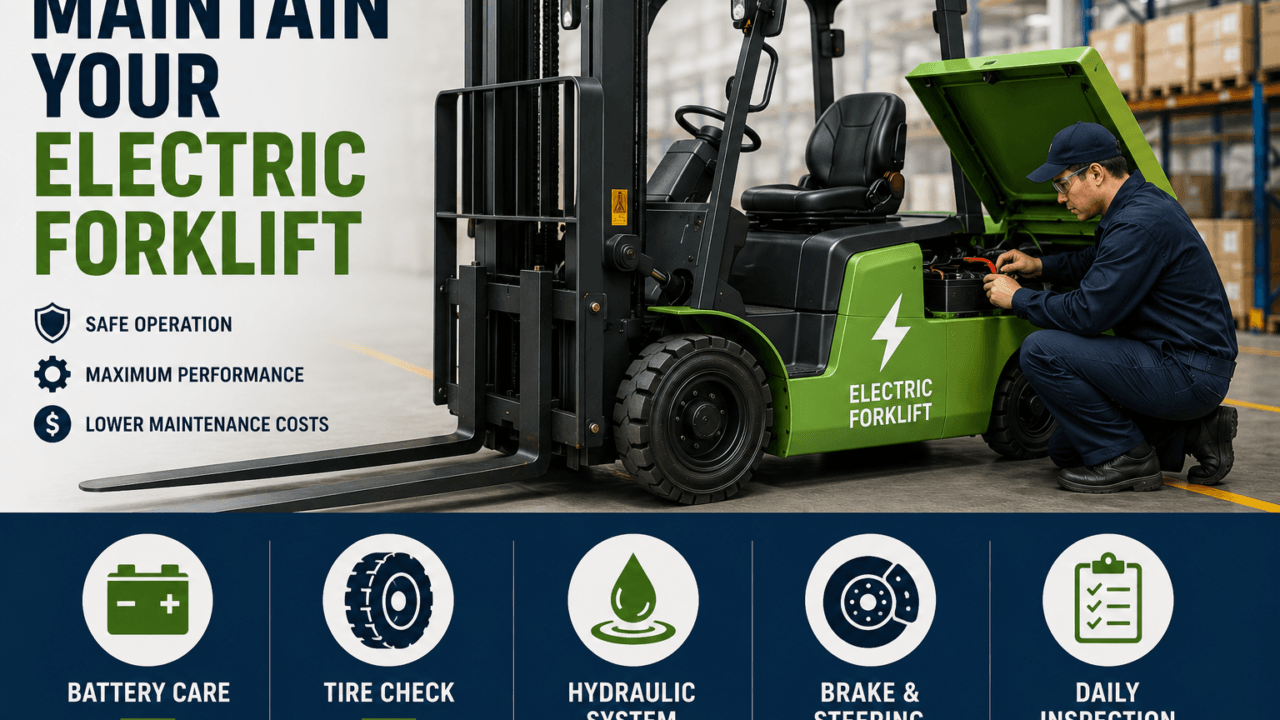
Electric forklifts are widely used in warehouses, logistics centers, and manufacturing facilities because of their low noise, zero emissions, and lower operating costs. However, regular maintenance is essential to ensure stable performance, workplace safety, and long equipment lifespan.
In this guide, we will explain how to maintain an electric forklift properly, including battery care, tire inspection, hydraulic maintenance, and daily service tips.
Why Electric Forklift Maintenance Is Important
Proper electric forklift maintenance helps:
- Extend equipment lifespan
- Reduce unexpected downtime
- Improve workplace safety
- Lower repair costs
- Maintain stable operating performance
Compared with diesel forklifts, electric forklifts generally require less maintenance, but battery systems and electrical components still require regular inspection.
Daily Electric Forklift Inspection Checklist
Operators should inspect the forklift before each shift.
Daily Inspection Items
- Battery charge level
- Fork condition
- Hydraulic oil leakage
- Tire condition
- Brake performance
- Steering operation
- Warning lights and horn
- Mast and chain condition
Regular inspections help identify small problems before they become major repairs.
For routine inspection procedures, read our forklift maintenance checklist.
Electric Forklift Battery Maintenance
The battery is one of the most important components of an electric forklift.
Battery Maintenance Tips
- Charge the battery correctly
- Avoid deep discharging
- Keep battery terminals clean
- Inspect cables and connectors regularly
- Use the correct charger
Improper charging habits can significantly reduce battery lifespan.
For more details, visit our electric forklift battery guide.
How to Charge an Electric Forklift Properly
Correct charging improves efficiency and battery life.
Recommended Charging Practices
- Charge in a well-ventilated area
- Avoid overcharging
- Allow batteries to cool before charging
- Follow manufacturer charging instructions
Lithium batteries support opportunity charging, while lead-acid batteries may require longer charging periods.
Tire Maintenance for Electric Forklifts
Forklift tires directly affect:
- Stability
- Maneuverability
- Safety
- Warehouse floor protection
Tire Inspection Tips
- Check for uneven wear
- Inspect cracks or damage
- Maintain correct tire pressure if applicable
- Replace worn tires promptly
Indoor electric forklifts commonly use cushion tires for smooth warehouse floors.
Hydraulic System Maintenance
Electric forklifts rely on hydraulic systems for lifting and steering functions.
Common Hydraulic Maintenance Tasks
- Check hydraulic oil levels
- Inspect hoses for leaks
- Replace worn seals
- Monitor lifting performance
Hydraulic system problems can reduce lifting efficiency and workplace safety.
If your forklift experiences lifting or steering issues, read our common forklift problems and solutions guide.
Brake and Steering Maintenance
Braking and steering systems should always remain in good condition.
Maintenance Recommendations
- Test brakes daily
- Inspect steering response
- Check hydraulic steering systems
- Replace damaged components immediately
This is especially important for warehouse operations with narrow working spaces.
Cleaning and General Care
Keeping the forklift clean improves both performance and appearance.
Recommended Practices
- Remove dust and debris regularly
- Keep electrical components dry
- Clean battery compartments
- Inspect cooling systems
Clean equipment is easier to inspect and maintain.
Common Electric Forklift Problems
Battery Draining Quickly
Possible causes:
- Old battery
- Incorrect charging
- Excessive usage
Slow Lifting
Possible causes:
- Low hydraulic oil
- Hydraulic leaks
- Overloaded operation
Steering Problems
Possible causes:
- Tire wear
- Hydraulic issues
- Steering component damage
Preventive maintenance can reduce most operational problems before they affect productivity.
Electric Forklift vs Diesel Forklift Maintenance
Electric forklifts usually require:
- Less engine maintenance
- Fewer moving parts
- Lower operating costs
Diesel forklifts may require:
- Engine oil changes
- Fuel system maintenance
- More frequent mechanical servicing
Electric forklifts are generally more suitable for indoor warehouse environments with continuous daily operation.
How Often Should Electric Forklifts Be Serviced?
Service intervals depend on:
- Operating hours
- Work environment
- Load intensity
- Battery type
General Recommendation
- Daily inspections before operation
- Weekly maintenance checks
- Professional servicing every few months
Following a maintenance schedule can significantly reduce repair costs.
Best Practices for Extending Electric Forklift Lifespan
To maximize forklift lifespan:
- Train operators properly
- Avoid overloading
- Follow maintenance schedules
- Use quality replacement parts
- Store forklifts in suitable environments
Proper operation and preventive maintenance are the best ways to improve long-term reliability.
Conclusion
Regular maintenance is essential for keeping electric forklifts safe, efficient, and reliable.
Proper battery care, tire inspection, hydraulic maintenance, and daily checks can help reduce downtime and extend equipment lifespan.
A well-maintained electric forklift improves warehouse productivity and lowers long-term operating costs.
FAQs
How often should an electric forklift be maintained?
Daily inspections are recommended, with scheduled professional servicing based on operating hours.
What is the most important part of electric forklift maintenance?
Battery maintenance is one of the most critical aspects of electric forklift care.
Do electric forklifts require less maintenance than diesel forklifts?
Yes. Electric forklifts generally have fewer moving parts and lower maintenance requirements.
How can I extend electric forklift battery life?
Use correct charging practices, avoid deep discharging, and inspect batteries regularly.