No products in the cart.
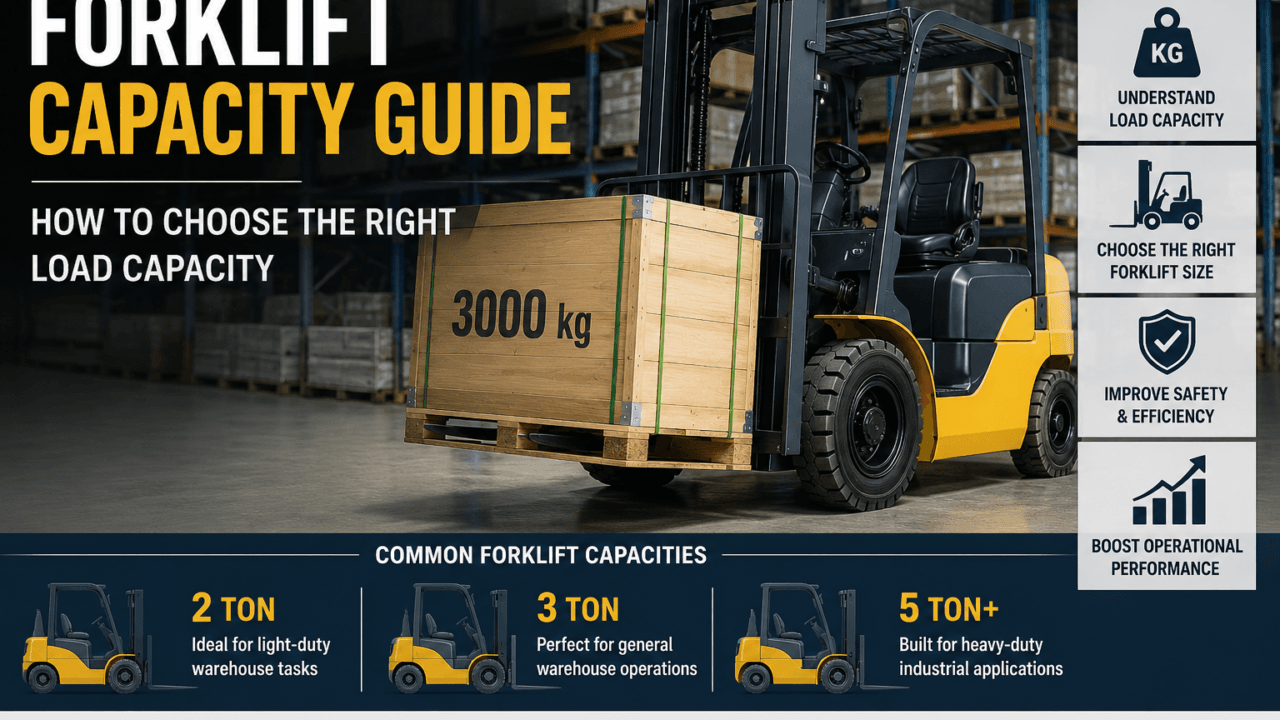
Choosing the correct forklift capacity is critical for warehouse safety, operational efficiency, and long-term equipment performance. Selecting a forklift that is too small can create safety risks, while an oversized forklift may increase fuel consumption and operating costs.
In this forklift capacity guide, we explain how forklift load capacity works, common forklift sizes, and how to choose the best forklift for your warehouse or industrial operation.
For a complete overview of forklift types and applications, visit our Forklift Types and Applications Guide.
What Is Forklift Load Capacity?
Forklift load capacity refers to the maximum weight a forklift can safely lift and transport under specific operating conditions.
Forklift capacities are commonly measured in:
- Kilograms (kg)
- Pounds (lbs)
- Tons
Common Forklift Capacity Examples
| Forklift Capacity | Maximum Load |
|---|---|
| 2 Ton Forklift | 2,000 kg |
| 2.5 Ton Forklift | 2,500 kg |
| 3 Ton Forklift | 3,000 kg |
| 5 Ton Forklift | 5,000 kg |
| 10 Ton Forklift | 10,000 kg |
Why Forklift Capacity Matters
Using the wrong forklift capacity can lead to serious operational problems, including:
- Reduced lifting stability
- Equipment damage
- Faster tire and mast wear
- Increased accident risk
- Lower warehouse efficiency
Choosing the correct forklift improves:
- Workplace safety
- Loading efficiency
- Equipment lifespan
- Fuel or battery efficiency
- Overall productivity
Follow our forklift safety tips to ensure safe operation.
How Forklift Capacity Is Calculated
Forklift lifting capacity depends on several important factors:
- Load weight
- Load center distance
- Lift height
- Fork length
- Attachment type
- Tire configuration
What Is a Load Center?
The load center is the distance from the front face of the forks to the center of gravity of the load.
Standard Forklift Load Centers
Most forklifts are rated at:
- 500 mm load center
- 600 mm load center
As the load center increases, the forklift’s actual lifting capacity decreases.
For example, a 3 ton forklift may not safely lift 3 tons if the load is oversized or unevenly distributed.
Common Forklift Capacity Types
1. 2 Ton Forklift
Best For
- Small warehouses
- Retail logistics
- Light manufacturing
- Indoor material handling
Advantages
- Compact design
- Excellent maneuverability
- Lower maintenance costs
- Suitable for narrow aisles
Typical Applications
- Pallet transportation
- Supermarket distribution centers
- Small storage facilities
2. 3 Ton Forklift
The 3 ton forklift is one of the most popular forklift sizes worldwide.
Suitable For
- General warehouse operations
- Manufacturing facilities
- Medium-duty logistics
- Loading and unloading containers
Benefits
- Versatile performance
- Strong lifting capability
- Cost-effective operation
- Suitable for both indoor and outdoor use
This capacity is often considered the best balance between lifting power and operational flexibility.
3. 5 Ton Forklift
Designed For
- Heavy industrial applications
- Construction material handling
- Steel and machinery transportation
- Port and yard operations
Key Features
- High lifting stability
- Strong diesel power
- Durable heavy-duty chassis
- Better outdoor performance
For heavy lifting applications, diesel forklifts are commonly preferred due to their power and endurance.
Electric vs Diesel Forklift Capacity
Electric Forklift
Best For
- Indoor warehouses
- Food and pharmaceutical industries
- Narrow aisle storage
- Medium-duty handling
Advantages
- Zero emissions
- Lower noise levels
- Reduced maintenance
- Lower operating costs
Modern lithium battery forklifts now offer improved lifting capacity and longer operating hours.
Learn more about our electric forklift products.
Diesel Forklift
Best For
- Outdoor operations
- Rough terrain environments
- Heavy-duty industrial work
- Long operating shifts
Advantages
- Higher torque output
- Faster refueling
- Strong heavy-load performance
- Better for continuous operation
Diesel forklifts are widely used in ports, factories, construction sites, and container yards.
Read our diesel forklift applications guide.
How to Choose the Right Forklift Capacity
1. Determine Maximum Load Weight
Always select a forklift with slightly higher capacity than your normal maximum load requirements.
This provides:
- Better safety margins
- Improved stability
- Reduced equipment stress
2. Consider Lift Height
As lift height increases, actual lifting capacity may decrease.
High-rack warehouses often require forklifts with:
- Reinforced masts
- Counterbalance optimization
- Higher residual capacity
3. Evaluate Warehouse Layout
Warehouse layout significantly affects forklift selection.
For tight spaces, consider:
- Narrow aisle forklifts
- Reach trucks
- Electric forklifts
- Compact counterbalance forklifts
These forklifts improve maneuverability and storage density.
Explore our Narrow Aisle Forklift Guide.
4. Consider Future Business Growth
If your operation is expanding, investing in a slightly higher-capacity forklift may reduce future replacement costs.
Consider:
- Increased pallet weight
- Higher storage racks
- Additional warehouse space
- Future production expansion
Forklift Capacity Chart
| Forklift Type | Typical Capacity | Best Application |
|---|---|---|
| Electric Forklift | 1–3 Tons | Indoor warehouses |
| Reach Truck | 1–2.5 Tons | Narrow aisle storage |
| LPG Forklift | 2–5 Tons | Mixed indoor/outdoor use |
| Diesel Forklift | 3–10+ Tons | Outdoor heavy-duty work |
| Heavy Duty Forklift | 10–48 Tons | Ports & industrial sites |
What Happens If a Forklift Is Overloaded?
Forklift overloading is one of the leading causes of workplace accidents.
Common Risks of Overloading
- Forklift tipping
- Loss of steering control
- Mast failure
- Damaged forks
- Hydraulic system overload
- Increased tire wear
Overloaded forklifts can also reduce braking performance and increase stopping distance.
Always follow the forklift’s rated capacity plate.
Which Forklift Capacity Is Best for Warehouses?
Quick Answer
- 2 ton forklifts are ideal for small warehouses and retail logistics
- 3 ton forklifts are best for general warehouse operations
- 5 ton forklifts are suitable for heavy industrial applications
- Electric forklifts are preferred for indoor warehouse environments
- Diesel forklifts are better for outdoor heavy-duty work
For warehouse planning, also consider aisle width, pallet size, and storage rack height.
Visit our Best Forklift for Warehouse Guide for more details.
Tips for Improving Forklift Efficiency
To maximize forklift performance and reduce operating costs:
- Match forklift capacity to actual workload
- Train operators regularly
- Perform daily inspections
- Follow a preventive maintenance schedule
- Use proper tire types
- Maintain battery health for electric forklifts
Daily inspections can help reduce downtime and improve safety.
Use our Forklift Maintenance Checklist for routine inspections.
Conclusion
Choosing the correct forklift capacity is essential for safe and efficient material handling operations.
The ideal forklift should match:
- Load weight requirements
- Warehouse layout
- Lift height
- Indoor or outdoor environment
- Long-term operational needs
A properly selected forklift improves:
- Workplace safety
- Productivity
- Equipment lifespan
- Operating efficiency
- Long-term return on investment
Whether you need a compact electric forklift for warehouse use or a heavy-duty diesel forklift for industrial operations, selecting the right load capacity is the foundation of efficient material handling.
FAQs
1. What is the most common forklift capacity?
The 3 ton forklift is one of the most commonly used forklifts for warehouse and industrial applications.
2. How do I know what forklift capacity I need?
You should evaluate:
- Maximum load weight
- Lift height
- Warehouse layout
- Indoor or outdoor use
- Future operational needs
3. Does lift height affect forklift capacity?
Yes. As lift height increases, actual forklift lifting capacity may decrease due to stability limitations.
4. Can electric forklifts handle heavy loads?
Yes. Modern electric forklifts can handle medium to heavy loads, especially lithium battery models. However, diesel forklifts are still preferred for extreme heavy-duty outdoor applications.