No products in the cart.
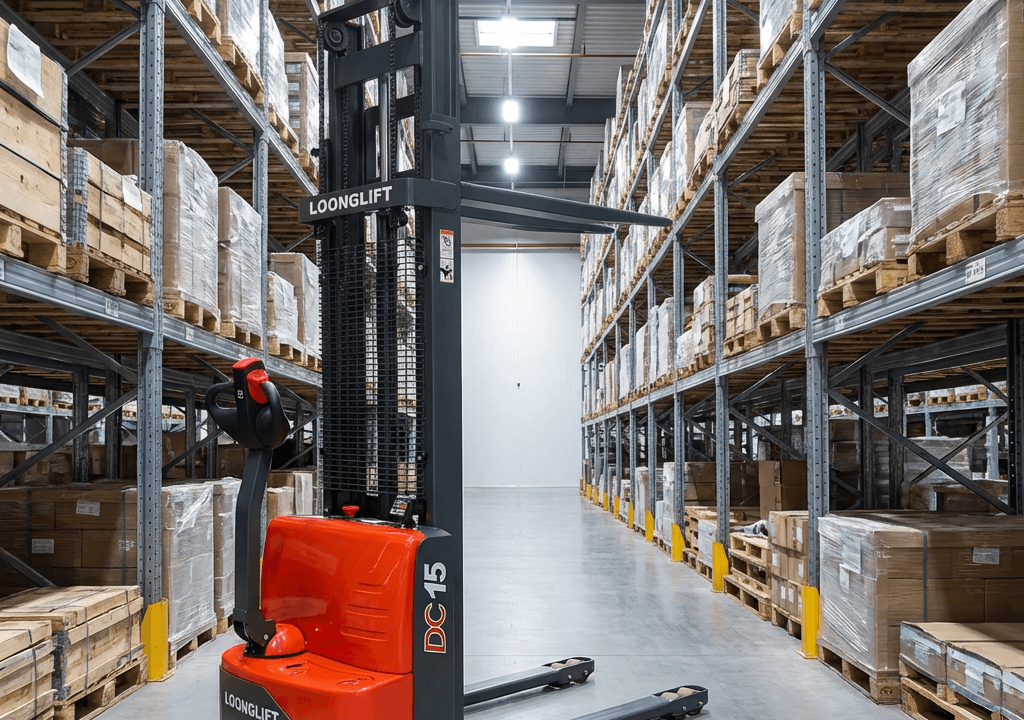
Discover whether a 1.5 ton electric stacker is right for your warehouse. Learn specifications, applications, and key buying factors for better material handling decisions.
A 1.5 ton electric stacker is ideal for small to medium warehouses handling light to medium pallet loads. It offers compact design, low cost, and easy operation, making it a practical alternative to forklifts in narrow aisle environments.
H1: 1.5 Ton Electric Stacker: Is It the Right Choice for Your Warehouse?
If you’re managing a warehouse with limited space and moderate lifting needs, a 1.5 ton electric stacker can be a highly efficient solution.
But is it enough for your operation?
In this guide, we’ll help you understand:
- Typical specifications
- Suitable applications
- Limitations
- Key buying factors
H2: What Is a 1.5 Ton Electric Stacker?
A 1.5 ton electric stacker is a compact material handling solution designed for:
- Pallet stacking
- Short-distance transportation
- Indoor warehouse operations
It is commonly used in:
- Small warehouses
- Retail storage areas
- Light logistics environments
Compared to forklifts, it is:
- More compact
- Easier to operate
- More cost-effective
H2: Typical Specifications of a 1.5 Ton Electric Stacker
To better understand its capabilities, here are typical industry specifications (may vary depending on model and manufacturer):
- Load Capacity: 1500 kg
- Load Center: 600 mm
- Lift Height: 1600–3300 mm
- Travel Speed: Around 4 km/h
- Turning Radius: Approx. 1300–1400 mm
- Minimum Aisle Width: Around 1900 mm
- Battery: 24V system
- Operation Type: Walkie
👉 These figures represent common configurations. Different models may offer:
- Higher lift heights
- Larger battery capacity
- Ride-on or platform options
Electric Stacker CDD15-070ES for Warehouse
H2: Explore Electric Stacker Options
If you’re comparing different configurations, it’s helpful to review a full range of available models.
👉 Browse here:
/electric-stacker
H2: When Should You Choose a 1.5 Ton Electric Stacker?
1. Small to Medium Warehouse Operations
Ideal for daily pallet handling with moderate workload.
2. Narrow Aisle Environments
With an aisle requirement of around 1900 mm, it fits well in compact storage layouts.
3. Budget-Conscious Operations
Compared to forklifts:
- Lower upfront investment
- Lower maintenance cost
- No fuel required
4. Light to Medium Duty Tasks
Best suited for:
- Loads ≤1500 kg
- Standard pallet handling
- Indoor operations
H2: When Is a 1.5 Ton Stacker Not Enough?
This type of stacker may not be suitable if:
- Load exceeds 1.5 tons
- Long-distance transport is required
- Outdoor or rough terrain operation is needed
- High-speed handling is critical
In these cases, a forklift is usually a better choice.
H2: Electric Stacker vs Forklift (Quick Comparison)
| Feature | Electric Stacker | Forklift |
|---|---|---|
| Cost | Lower | Higher |
| Size | Compact | Larger |
| Operation | Walkie | Seated |
| Best For | Indoor use | Heavy-duty tasks |
👉 For a detailed comparison, you can also read:
/electric-stacker-vs-forklift
Are All 1.5 Ton Electric Stackers the Same?
Not exactly.
Even with the same rated capacity, models can differ in:
- Lift height
- Battery capacity
- Drive type (walkie vs ride-on)
- Mast structure
- Build quality
👉 Choosing the right configuration is more important than just focusing on capacity.
Key Factors to Consider Before Buying
1. Lift Height
- 1.6m → low storage
- 3.0m+ → racking systems
2. Battery Capacity
- Smaller battery → light duty
- Larger battery → longer working time
3. Aisle Width Requirement
Ensure compatibility with your warehouse layout.
4. Floor Conditions
PU wheels are ideal for:
- Smooth indoor floors
- Low-noise operation
Is It Suitable for Southeast Asia Markets?
Yes, in many cases.
Because:
- Warehouses tend to be space-limited
- Cost sensitivity is high
- Indoor logistics is dominant
👉 1.5 ton electric stackers are widely used in these environments.
Final Thoughts
A 1.5 ton electric stacker is a practical and versatile solution for many warehouse operations.
It offers:
- Compact design
- Cost efficiency
- Reliable indoor performance
However, the right choice depends on your:
- Warehouse layout
- Workload requirements
- Storage system
👉 Understanding these factors will help you select the most suitable equipment.