No products in the cart.
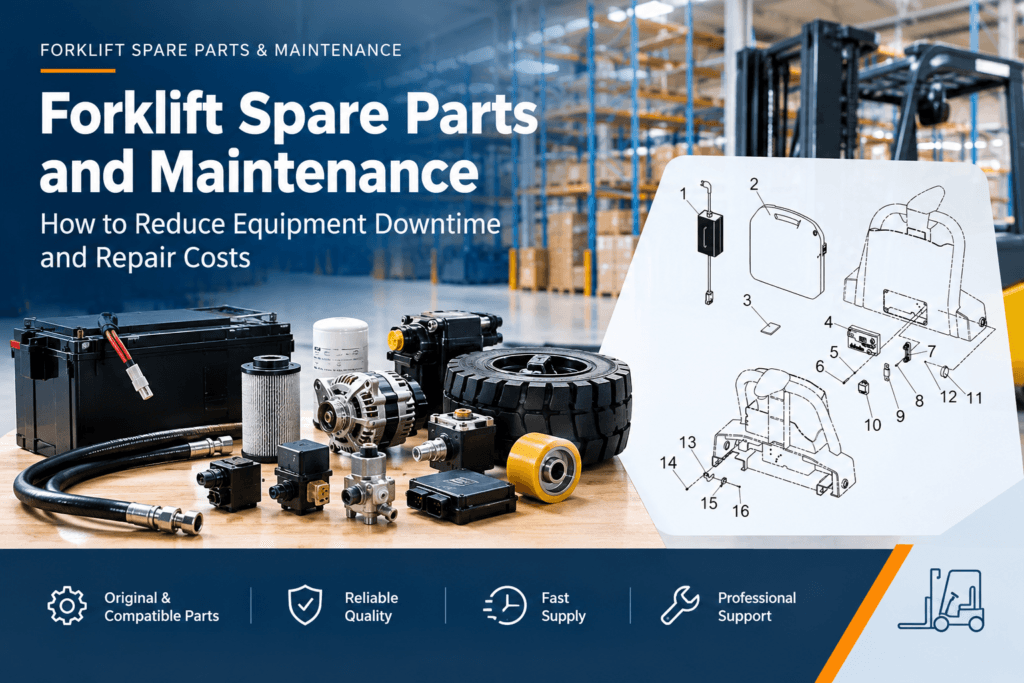
Forklift Spare Parts and Maintenance: How to Reduce Equipment Downtime and Repair Costs
When a forklift breaks down, the repair bill is not always the biggest problem.
For a warehouse, factory, or distribution center, the real cost may come from delayed shipments, interrupted production, idle workers, and missed delivery schedules.
Sometimes, the problem is relatively simple. A worn component needs replacing, a hydraulic part requires attention, or an electrical component needs to be checked. Yet the equipment can remain out of service while the business waits for the correct replacement part.
This is why spare parts availability and maintenance support should be considered before purchasing material handling equipment—not only after a breakdown occurs.
Spare parts availability is also an important factor in long-term equipment costs. Learn how to evaluate the total cost of ownership of a forklift before comparing supplier quotations.
Whether you operate electric forklifts, diesel forklifts, electric pallet trucks, or electric stackers, having a practical maintenance plan and access to suitable replacement parts can help you control operating costs and keep your equipment working reliably.
In this guide, we’ll explain which forklift spare parts buyers should pay attention to, how to reduce unnecessary downtime, and what to check when choosing an equipment supplier.
Why Forklift Spare Parts Matter to Your Business
Forklifts and other material handling equipment work in demanding environments. Daily lifting, repeated travel, frequent turning, and continuous loading place wear on components over time.
Even well-maintained equipment requires inspections, servicing, and eventual replacement of certain parts.
The challenge is not simply whether a part will need replacing. It is whether you can identify the problem, obtain the correct part, and complete the repair without unnecessary delays.
A missing or incorrect component can turn a routine repair into a much longer interruption.
Before purchasing equipment, buyers should therefore consider three questions:
- Which components are likely to require routine inspection or replacement?
- Can the supplier provide compatible spare parts for the equipment supplied?
- How can replacement parts be identified and ordered when maintenance is required?
These questions are particularly important for businesses that rely on their equipment every working day or operate multiple shifts.
Common Forklift Spare Parts That Require Attention
The parts required depend on the equipment model, operating hours, working environment, and maintenance history. However, several component categories deserve regular attention.
1. Hydraulic System Components
Hydraulic systems are essential for lifting and lowering loads on many forklifts and stackers.
Components that may require inspection or replacement include hydraulic hoses, seals, filters, and other model-specific hydraulic parts.
Leaks, abnormal lifting performance, or unusual noises should be investigated promptly. Continuing to operate equipment with a suspected hydraulic fault can increase repair costs and create safety risks.
2. Electrical Components
Electric forklifts, pallet trucks, and stackers rely on electrical and electronic systems for operation.
Depending on the model, replacement parts may include switches, sensors, contactors, wiring components, controllers, and other electrical items.
Electrical faults can have different causes, so replacing a component without proper diagnosis may not resolve the problem.
Before ordering electrical parts, confirm the equipment model, component identification, and any relevant part number.
3. Battery and Charging Components
Battery condition has a direct impact on the availability of electric material handling equipment.
Depending on the battery type and equipment design, maintenance may involve checking connections, inspecting charging equipment, and following the manufacturer’s recommended battery care procedures.
When a battery or charger problem occurs, confirm whether the fault originates from the battery, charger, connections, or another part of the electrical system before ordering a replacement.
4. Wheels, Rollers, and Tires
Wheels, rollers, and tires experience wear through repeated movement, turning, braking, and contact with warehouse floors.
For electric pallet trucks and stackers, worn load rollers or drive wheels can affect maneuverability and operating performance.
For counterbalance forklifts, tire condition can influence traction, stability, and suitability for the working surface.
The correct replacement depends on the equipment model, wheel dimensions, material, load requirements, and operating environment.
5. Braking and Safety-Related Components
Brakes, safety switches, emergency stop systems, and other safety-related components must be inspected according to the manufacturer’s maintenance requirements.
If a safety-critical component is damaged or malfunctioning, remove the equipment from service as appropriate and arrange a qualified inspection and repair.
Do not continue operating equipment simply because a replacement part has not yet arrived.
How to Reduce Forklift Repair Costs Without Compromising Safety
Lower maintenance costs do not come from delaying necessary repairs or using the cheapest available components.
A more effective approach is to identify problems early, use compatible replacement parts, and prevent avoidable failures.
Follow a Preventive Maintenance Schedule
Regular inspections help identify wear and abnormal operating conditions before they lead to more serious failures.
A maintenance program should follow the manufacturer’s instructions and reflect actual operating conditions.
Depending on the equipment, routine checks may cover:
- Tires, wheels, and load rollers
- Forks and visible structural components
- Hydraulic hoses and signs of leakage
- Brakes and steering
- Battery condition and charging equipment
- Electrical controls and warning devices
- Safety systems and emergency stops
Keep maintenance records so your team can identify recurring problems and plan replacement parts more effectively.
Confirm the Correct Part Before Ordering
A replacement part that looks similar to the original may not be compatible with your equipment.
Differences in dimensions, electrical specifications, connectors, materials, or model revisions can affect installation and performance.
When requesting spare parts, provide as much information as possible:
- Equipment type and model
- Serial number, where available
- Part number or component identification
- Clear photographs of the original component
- Dimensions or technical specifications, if known
- Description of the fault
This information helps the supplier identify the appropriate part and reduces the risk of ordering an incorrect component.
Plan for Common Replacement Parts
If your equipment operates daily, waiting until a component fails before checking its availability can create unnecessary delays.
Review your maintenance records to identify the parts most frequently required by your operation.
For equipment fleets, maintaining a suitable stock of critical consumables or replacement components may reduce repair waiting time. The appropriate inventory depends on equipment quantity, usage intensity, lead times, and the cost of storing parts.
Not every business needs to keep every component in stock. The goal is to prioritize parts based on operational risk and actual demand.
Why Spare Parts Support Should Be Considered Before Purchase
Many buyers compare equipment specifications and prices carefully but leave spare parts questions until after delivery.
This can create problems when equipment requires maintenance and the buyer does not know how to identify or obtain the correct component.
Before placing an order, ask the supplier:
- Can you supply compatible spare parts for this model?
- Can you help identify parts using photographs or part numbers?
- Are maintenance manuals or parts information available?
- What information is needed to confirm compatibility?
- What are the estimated lead times for commonly required components?
- Can spare parts be ordered together with the equipment?
A supplier who can support both equipment purchasing and spare parts sourcing gives buyers another option when planning maintenance and future operating expenses.
For international buyers, it is also worth confirming shipping arrangements, parts availability, and whether the component can be exported to the destination country.
We Supply Material Handling Equipment and Corresponding Spare Parts
Choosing equipment is only one part of managing a warehouse fleet. Keeping that equipment serviceable throughout its working life is equally important.
We supply a range of material handling equipment, including electric forklifts, diesel forklifts, electric pallet trucks, electric stackers, and other warehouse equipment. We can also assist customers with sourcing corresponding spare parts for their equipment requirements.
Our aim is to help buyers consider not only the initial equipment purchase, but also the practical requirements of maintenance and replacement parts.
When contacting us about spare parts, please provide the equipment model, serial number if available, component photographs, and part number where possible. This information helps us assess the requirement and confirm the appropriate replacement option.
Part compatibility and availability should be confirmed for each specific request.
Whether you are purchasing new equipment, maintaining an existing machine, or planning spare parts requirements for a warehouse fleet, discussing these needs early can help you make a more informed purchasing decision.
How to Request the Correct Forklift Spare Parts
To help identify the required component efficiently, prepare the following information before contacting a supplier.
Equipment information
- Equipment type: forklift, pallet truck, stacker, or other machine
- Brand and model
- Serial number or production year, if available
Part information
- Part name or part number
- Clear photographs of the component
- Dimensions or specifications, if available
- Description of the fault or reason for replacement
Shipping information
- Destination country and city
- Required quantity
- Preferred delivery timeframe
If you are unsure of the part name, photographs and equipment identification details can be a useful starting point. The supplier may need additional information before confirming compatibility.
Frequently Asked Questions
What forklift spare parts are commonly replaced?
Common replacement items may include tires, wheels, rollers, filters, hydraulic hoses, seals, electrical components, and battery-related components. Actual requirements depend on equipment type, model, operating conditions, and maintenance history.
Can I order forklift spare parts without knowing the part number?
In many cases, you can begin an inquiry using the equipment model, serial number, and clear photographs of the component. Additional identification may be necessary to confirm the correct replacement.
How can I reduce forklift maintenance costs?
Follow the manufacturer’s maintenance schedule, inspect equipment regularly, address faults early, use compatible replacement parts, and keep records of repairs and operating hours.
Should I keep spare parts in stock?
Businesses with frequent equipment use or long replacement-part lead times may benefit from keeping selected critical components available. Inventory decisions should be based on equipment usage, historical failures, lead times, and the financial impact of downtime.
Can electric pallet trucks and stackers also require replacement parts?
Yes. Depending on the model and usage, these machines may require replacement wheels, rollers, switches, electrical components, hydraulic parts, batteries, or other model-specific items.
Can a supplier help identify a replacement component from a photograph?
A photograph can help with initial identification, especially when accompanied by the equipment model, serial number, and any available part number. However, photographs alone may not be sufficient to confirm compatibility in every case.
Keep Your Equipment Running With Better Parts Planning
Equipment maintenance should not begin only when a machine breaks down.
By understanding common replacement-part requirements, following a preventive maintenance schedule, and confirming spare parts support before purchasing, businesses can make better decisions about equipment availability and long-term operating costs.
If you need material handling equipment or corresponding spare parts, contact our team with your equipment model and requirements. We can help assess your request and check suitable parts options for your application.